
CHIANG MAI GYMKHANA
EST. 1898
Est. 1898
126 years of sport, community, and resilience in northern Thailand
The Chiang Mai Gymkhana is often described as a British institution. That is only half the story. The land was granted by a Thai Prince with the blessing of King Rama V. When Japan left in 1945 and the grounds lay in ruin, it was the Thai elite of Chiang Mai who helped rebuild it. The membership today spans Thai families, long-term expatriates, and visitors from across the world. For 126 years, the Gymkhana has been where Chiang Mai meets itself.
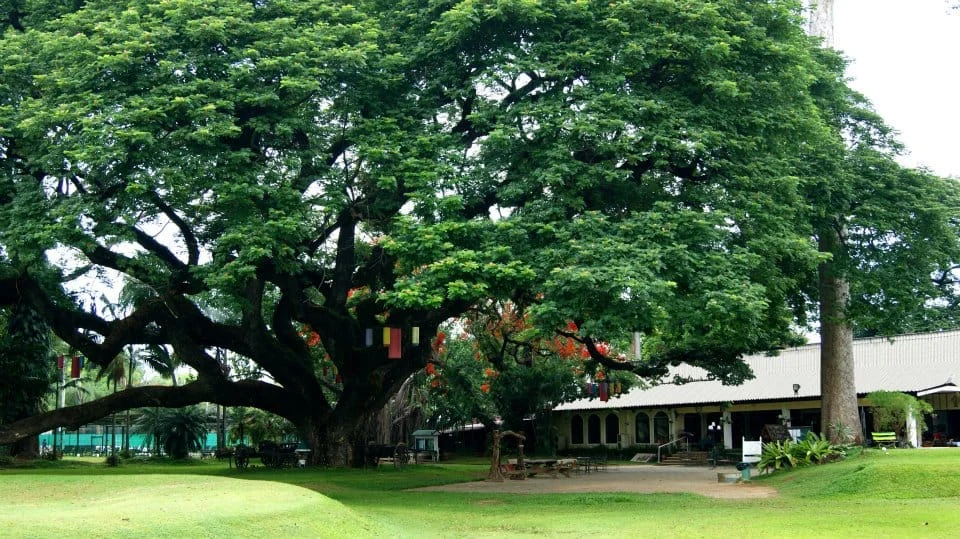
The founding was not a British imposition on a Thai landscape. It was a negotiation. The fourteen founders approached Chao Intawarorot Suriyavongse, the Prince of Chiang Mai, and asked for land. He could have refused. Instead, he granted 90 rai of flat ground near the Ping River, with the formal blessing of King Rama V. The deed was issued for the express purpose of "encouraging sport in Northern Siam." The Prince knew what he was doing: he was anchoring a cosmopolitan merchant class to his city, giving them a reason to stay and invest.
In the same royal act, King Rama V granted 24 rai of adjacent land to the south as the Chiang Mai Foreign Cemetery, so that the men who came to play would also have a place to rest. The two institutions were born from a single act of royal generosity. Many of the names on the club's Honour Boards are the same names found on the headstones next door. The Gymkhana was never fully a foreign place. It was always Chiang Mai's.
The fourteen founders came from the British Consulate, the Borneo Company Limited, the Bombay Burmah Trading Corporation, the Siam Forest Company, and the Siamese Royal Forest Department. Among them was Louis Leonowens, at the time a Borneo Company agent who had been running operations in Chiang Mai since 1889. The company bearing his name was not formally incorporated until 1905, seven years after he helped found the club. It still trades today. Of the fourteen signatories, only one held Thai nationality. The Honour Boards inside the old teak clubhouse list every President since 1898, a roll call of colonial and post-colonial Chiang Mai that reads like the city's own social history. Read the full founding story.
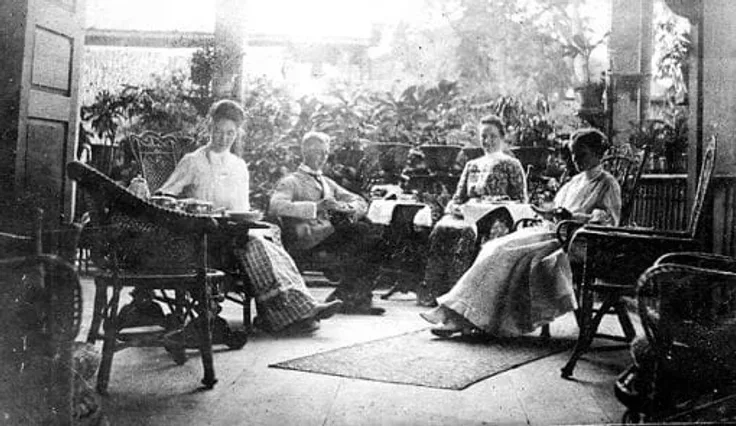
In the late 1800s, Chiang Mai was a month-long boat journey from Bangkok. There were no roads, no electricity, no telegraph. The men who ran the teak trade known as the Teak Wallahs spent nine months of every year deep in the forest, living in bamboo huts, managing thousands of elephants, and fighting off malaria, tiger attacks, and what the colonial records quietly called "Jungle Madness." The Gymkhana Club was built to treat it.
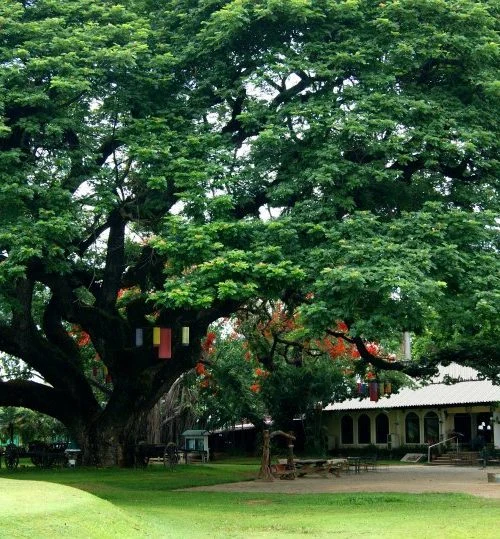
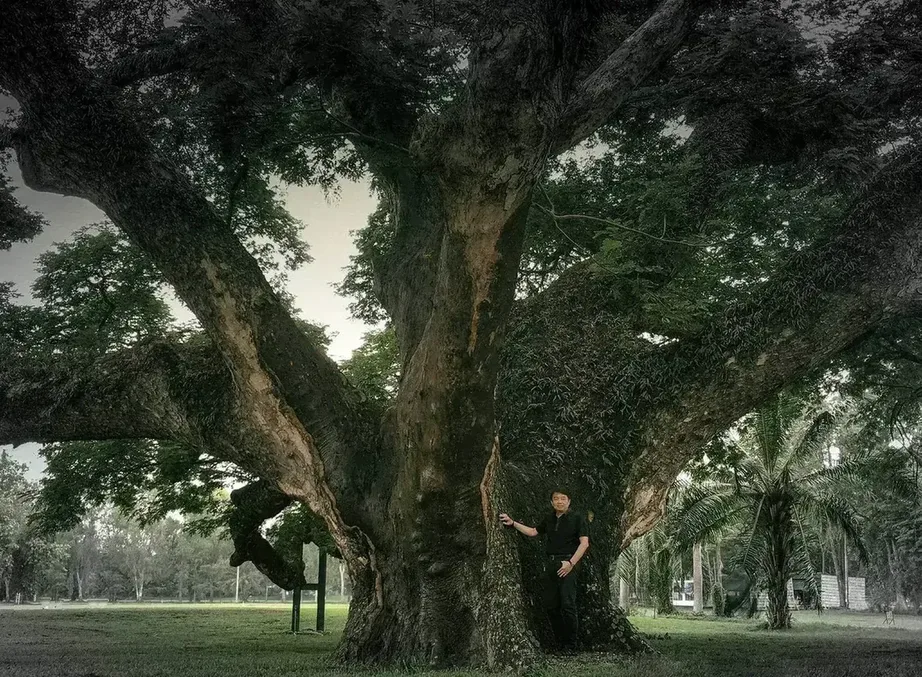
When the monsoon rains made jungle work impossible, the Wallahs descended on Chiang Mai. They traded jungle boots for cricket whites. They settled business rivalries over billiards. They sat under the rain tree and remembered, briefly, that they were human beings. The club was not a luxury. It was the difference between holding together and coming apart. The most vivid of these men was Louis Thomas Gunnis Leonowens, son of Anna Leonowens, tutor to King Mongkut's children. He was a polo obsessive who imported ponies from Burma and Australia, a prodigious character whose legacy is written in the timber and the turf of the Gymkhana, not in his mother's more famous story. The trading company he eventually founded in 1905 still operates today as a subsidiary of Getz Bros and Co. It outlasted the teak forests, the empire, and every company his fellow founders worked for. There is an additional layer to the founding story worth noting: one of the fourteen signatories was Herbert Slade, the first Conservator of Forests for Siam, appointed by the Siamese government specifically to regulate the teak industry. The man tasked with controlling the companies co-founded the club with the companies. That is the Gymkhana in miniature. The Teak Wallahs era in full.
"The fairways were waist-high in elephant grass, and the Long Bar was a shell of its former self. It was as if the jungle had tried to digest the British Empire in four short years. It failed."Club annals, post-war restoration, 1946
W.A.R. Wood arrived in Thailand in 1896. He served as British Consul in Chiang Mai for sixteen years, learned the language, married a Thai woman, and became one of the most respected men in the north. His memoir, Consul in Paradise, remains the most honest account of colonial Chiang Mai ever written, and the Gymkhana runs through it like a thread. He died in Chiang Mai. He is buried in the Foreign Cemetery next door a quiet pilgrimage site for members who know the history.
His son Dick followed him into the club and remained a member for decades, well into the 21st century. Between father and son, the Wood family represented over a century of unbroken membership at a single club. That is what the Gymkhana does to people. Somerset Maugham visited once and wrote about it brilliantly from the outside. Wood lived it for a lifetime and gave it to his son. The truest record of what membership here means is not in any book it is in the Honour Boards on the clubhouse wall, where the names accumulate year by year, and the continuity speaks for itself. Read the full literary legacy.
When the Japanese left in 1945, the returning British found the club barely recognisable. The fairways were waist-high in elephant grass. The golf course had been reclaimed by jungle. The original teak furniture was broken or gone. The Long Bar was a shell. What happened next is the least-told and most important chapter in the Gymkhana's story. The Thai elite of Chiang Mai stepped in. They helped facilitate the return of the land, provided the labour, and gave the resources to rebuild. The Gymkhana's survival after 1946 is as much a Thai story as a British one. The bond between communities forged through that recovery is the foundation the club still stands on.
The Gymkhana's numbers are the result of more than a century of unbroken community. Founded under royal blessing and sustained through wars, occupations, and transformation.
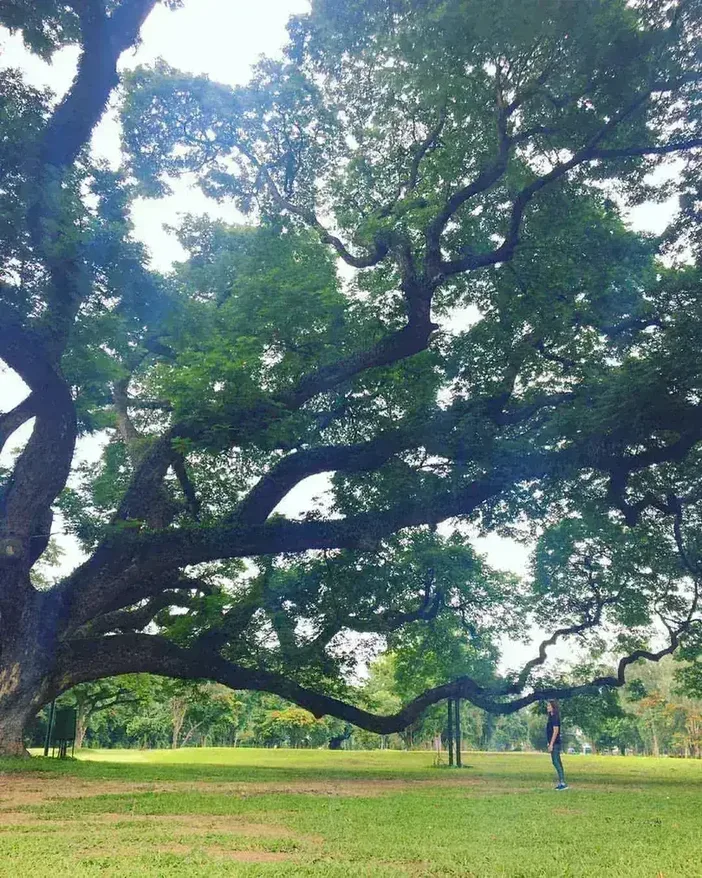
What began with fourteen men beneath a rain tree has endured every challenge the last 126 years could present.
Years of continuous operation
Rai of historic grounds
Founded with royal blessing
Founding members
The Gymkhana sits on the same 90 rai it has always occupied, now surrounded by a Chiang Mai that has grown entirely around it. The rain tree still stands. The colonial pavilion still overlooks the grounds. The nine-hole golf course still plays as it always has.
Today the club serves a membership that spans Thai families, long-term expatriates, and visitors who come for sport, dining, and the particular atmosphere that only 126 years of history can produce. Golf, tennis, and cricket remain the heartbeat of the operation, alongside dining, weddings, and private events in one of the most distinctive settings in northern Thailand. The Honour Boards still get new names. The rain tree still grows. A new electronic scoreboard recently survived a three-kilometre journey on floodwater and made it back in time for the Sixes. The club today is a working institution, not a museum.
The annual Chiang Mai International Cricket Sixes, launched in 1988, has grown into the world's best-known amateur cricket tournament. Teams arrive each year from Australia, the United Kingdom, Hong Kong, South Africa, and beyond.
Membership at the Gymkhana is open to individuals and families who share a genuine interest in sport and community. The club welcomes Thai and international members. There is no waiting list and no ballot process. The application is straightforward.
Prospective members are encouraged to visit the grounds, walk the course, and speak with existing members before applying. The club office is open Monday through Friday and can arrange a tour at your convenience.
For membership inquiries, contact the club by phone at +66 53 241 035, by email at chiangmaigymkhana@gmail.com, or via Messenger at the link below.
Full access to all club facilities. Golf, tennis, cricket, dining, and social spaces. The primary option for regular members.
Extends membership to a spouse and dependent children. Ideal for families seeking year-round recreational activity in Chiang Mai.
Designed for businesses who want to offer club access to employees and clients. Flexible and structured for organisations of any size.
Tailored access for those with specific sporting needs or limited schedules. Covers selected facilities or chosen sports activities.
Become part of one of Southeast Asia's oldest sporting institutions. Message us on Messenger to arrange a visit and discuss membership.
Message Us on Messenger